Sump Pump Failure Cleanup in Kennesaw, GA
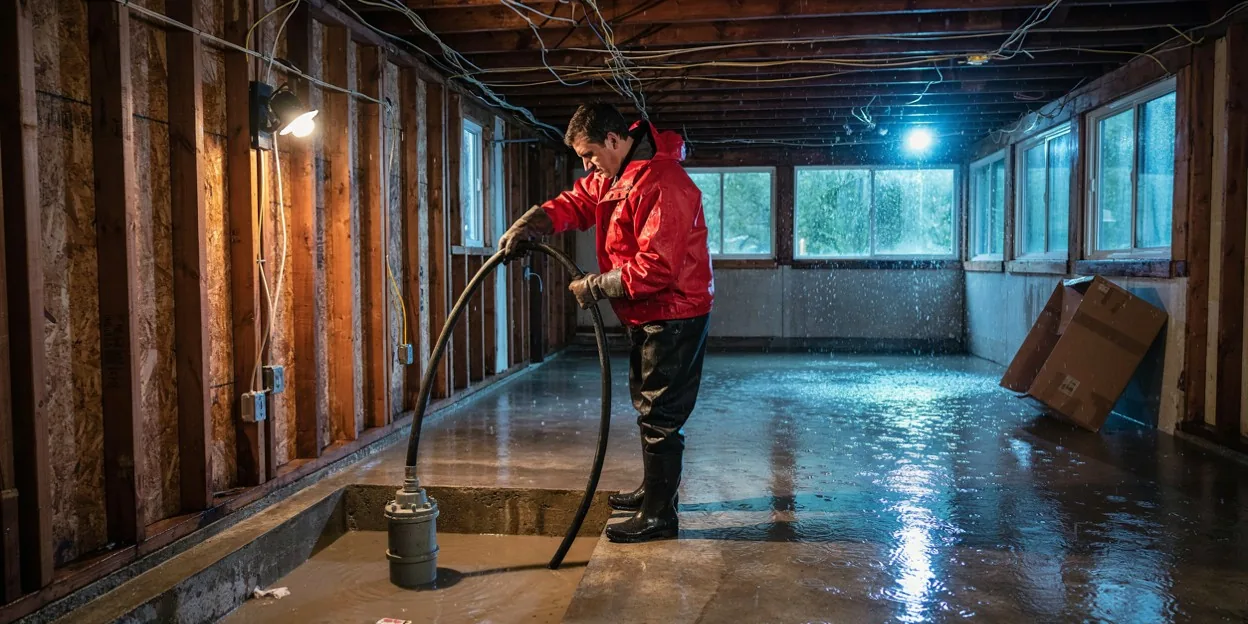
The storm knocked the power out at nine, and by the time it came back on the pit in the corner of the basement had overflowed across the whole floor, and the pump was humming away on a lake it had no chance of catching up with. This site connects you by phone with an independent local provider who does sump pump failure cleanup in Kennesaw and across Cobb County.
Why the pit overflowed changes what gets dried
The crew starts with the pump, not the puddle, because a basement that flooded from the pit will flood again unless the reason is known. A power outage, a float stuck against the side of the pit, a worn switch, a clogged discharge line, or a storm that simply beat the pump's capacity each get handled differently later. Then the standing water comes out with extractors and the readings start along the bottom of every wall, on the carpet pad, and on the slab.
The water from a sump overflow is groundwater, and it came in slowly over hours rather than all at once. That means it had time to wick a long way into drywall and pad before you saw it, so the crew meters walls that look dry, not just the corner where the pit is.
What to do while the pump is still running on empty
Turn off the breaker for the basement if the water is anywhere near an outlet, and do not walk through the water to get there. Unplug the pump if you can reach the cord without stepping in water. Get stored boxes, furniture, and anything on the floor up onto stairs or a table. Photograph the pit, the water line on the wall, and every wet item before it goes to the curb. Then call.
What comes out of a basement after the pit floods
Carpet that took groundwater almost always comes out, and the pad under it always does. Drywall gets metered at the base and flood-cut where it reads wet, with the insulation behind it removed. Stored contents get sorted by material: cardboard and particleboard go, plastic and metal get cleaned, and papers or photos can sometimes be dried if they are separated the same day.
Framing and the slab dry in place once the finishes are out of the way. From there the job is structural drying in a room with no natural airflow, which means dehumidifiers running for days and the crew coming back to read the numbers. The broader basement flooding cleanup page covers a basement that flooded through the wall instead of up from the pit. Fixing or replacing the pump, adding a battery backup, or rerouting the discharge line is separate work and worth doing before the next storm.
Daylight basements, buried walls, and pumps that lose power in a storm
Kennesaw sits on red clay that sheds rain instead of absorbing it, and the basements here were built into sloped lots with one wall buried uphill. Groundwater collects against that wall after a heavy rain, and the footing drain carries it to the sump pit. That system works until the pump stops, and the pump stops in exactly the weather that fills the pit: a summer thunderstorm or a tropical system that takes out the power. Irma's remnants did that on September 11, 2017, leaving parts of Cobb County dark for days while the ground stayed saturated.
The biggest test the county's pumps have faced was the week of September 16 to 22, 2009, when days of rain put Noonday Creek and Sweetwater Creek far above record and filled basements from Kennesaw to Austell whether the pump ran or not. Most Kennesaw pits were installed when the house was built in the 1990s or 2000s, and a pump of that age with no backup is the one that fails in the first outage. A discharge line that freezes at the outlet on a hard night, as happened during the December 2022 cold snap, does the same thing in winter.
Groundwater and sump overflow are among the losses a standard homeowner policy is least likely to cover without a separate endorsement, so ask the crew to photograph the pit and log readings from the first visit.
When you call about a sump pit that overflowed
Have the address ready and say whether the power is back, how deep the water got, whether the basement is finished, and whether the pump is running now. Say if you know why it stopped. Call (470) 574-4769.